PowerPoint to PDF: export slides for sharing and printing
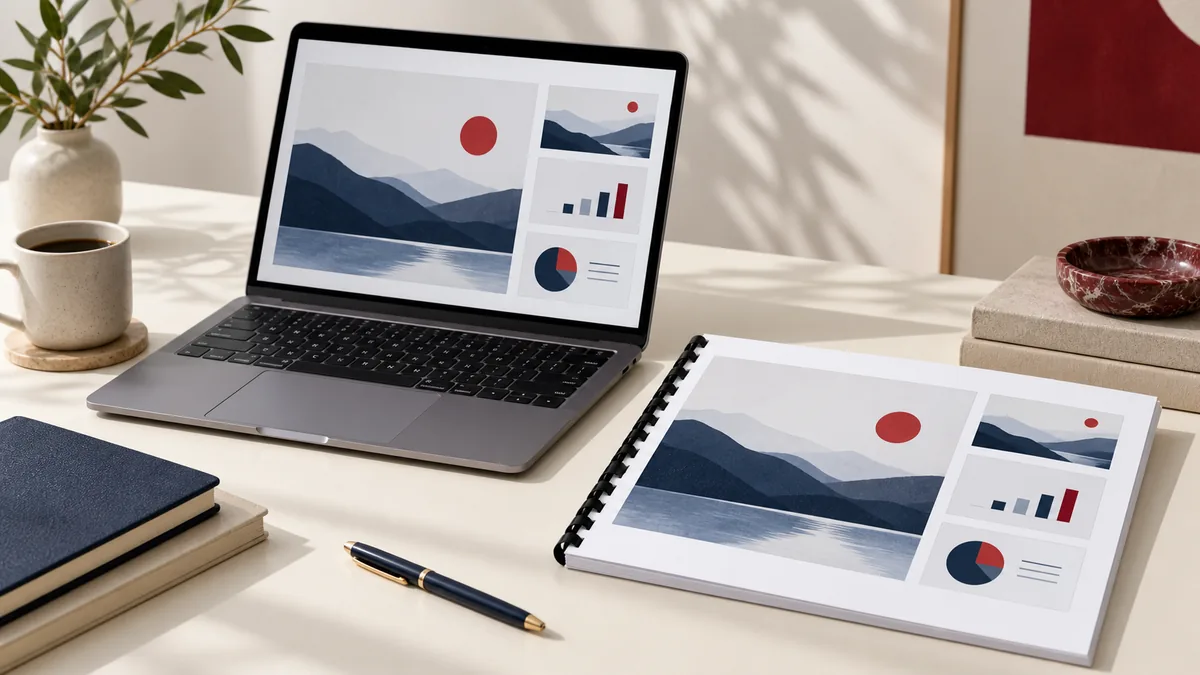
Need to PowerPoint to PDF and don’t want to wrestle with print dialogs or heavyweight desktop software? You can handle it directly in your browser. With PDFMaple’s PowerPoint to PDF tool, you upload your file, choose a couple of options, and download a polished result in minutes.
When to use PowerPoint to PDF
- Share slides with clients without layout shifts.
- Upload slides to platforms that prefer PDFs.
- Print handouts reliably across different systems.
- Archive a final version of a deck.
Step-by-step: PowerPoint to PDF in PDFMaple
- Open PowerPoint to PDF and upload your
.ppt/.pptxfile. - Run the tool to export slides to PDF.
- Download the PDF and review slide order and fonts.
- Optional: compress the PDF if you need a smaller attachment.
Pro tips for better results
- Avoid tiny text if your PDF will be read on phones—exporting preserves size exactly.
- If you need a PDF for printing, check slide background contrast first.
- Use watermarking for drafts (e.g., “DRAFT” or “INTERNAL”).
- Need to edit slides later? Keep the original PPTX; PDF is best for distribution.
Real-world use cases for PowerPoint to PDF
The real value shows up when the file has to work for the next person on the first try. For this workflow, the target is a deck that keeps the intended slide order and visual layout without font surprises.
Business and operations
Teams convert slides to PDF before sharing board decks, sales summaries, or internal training materials with people who do not need the editable presentation. That matters because the recipient gets a format they can open and review without asking for the source app or original file.
Student projects
Students often turn slide decks into PDFs before submitting them so the professor sees the same layout the student prepared. That is useful when the portal or reviewer expects a specific format and layout has to stay predictable.
Legal and admin work
Administrative teams may archive presentation materials as PDFs because they are easier to store and review over time. That helps preserve a cleaner handoff because the document arrives in a format built for stable viewing and printing.
Freelancer delivery
Consultants and designers use PDF exports when they want a client to review a deck without changing fonts, spacing, or animation-dependent layout. That gives clients a version they can read quickly without accidentally editing the working file.
Personal paperwork
People also export family presentations, event plans, or informational slide decks to PDF when they just need a simple file to print or email. That turns loose images or office files into one clearer document that is easier to upload, print, or store.
Expert tips that save rework
Conversion problems rarely come from the click itself. With powerpoint to pdf: export slides for sharing and printing, the real risk is source-file quirks, print settings, or layout drift that no one notices until the output is already shared.
- Simplify animations before export: Animations do not translate into static PDF pages. If a slide only makes sense when items appear in sequence, consider duplicating slides or simplifying the layout first.
- Review text near slide edges: Elements close to the edge of the slide are the first to look cramped in a PDF. Check titles, footers, and logos after export.
- Embed clarity in the slide itself: A PDF cannot rely on presenter narration. Make sure each slide still communicates the core point when viewed silently as a document.
- Choose image-heavy decks carefully: A slide deck full of screenshots or photos can produce a surprisingly large PDF. Compress afterward if the file has to travel by email.
- Export a final share copy: Keep your editable PPTX for future work, but treat the PDF as the presentation handoff copy. That separation keeps review cleaner.
If you only have time for one review, check font rendering, slide aspect ratio, hidden slides, and whether printing behaves as expected. That is usually the point where a rushed handoff creates avoidable back-and-forth.
Is it safe to upload your files?
With converting PowerPoint to PDF, most users are really asking whether the file is exposed during upload and whether the service hangs on to the contents afterward. PDFMaple handles the transfer over HTTPS/TLS, which protects the upload and download while the job is being completed. That is the practical baseline people want when the documents include things like client decks, training slides, proposals, and print handouts. This matters even more in export cases, where small workflow mistakes are easier to miss.
Files are processed on our server to create your output. Ordinary conversion workspaces are removed after the response; interactive editing needs temporary session storage. Read the file retention and privacy details before uploading sensitive documents.
Online tool vs desktop software — which should you use?
An online workflow is usually the better choice when the task is short, you do not want to install anything, or you are away from your usual machine. It is especially convenient on shared computers, on mobile, or when you only need this exact job once. For converting PowerPoint to PDF, that usually means an online tool is enough when the task is occasional and deadline-driven. That is especially true when the job is export rather than a broad recurring workflow.
The desktop route is stronger when you need speaker-note exports, advanced print layouts, and presentation workflows that need offline control. For routine document chores, though, the lighter online path is often the more sensible choice because it gets you to the output faster.
- One task, one result, no install
- Useful on shared or borrowed devices
- Quick enough for phone and tablet work
- Good when the file just needs to move forward
- Complex editing beyond the immediate task
- Managed enterprise or compliance setups
- Heavier production workflows
- Situations where local-only control is required
Frequently asked questions
Will animations be preserved in the PDF?
No. PDF export captures the final slide appearance, not animations or transitions. Open the converted output and compare the pages most likely to drift—tables, slide layouts, page breaks, or image-heavy sections—before you rely on it.
Can I convert a PDF back to PowerPoint?
Yes—use PDF to PowerPoint to create slides from PDF pages (often as images for consistency). Open the converted output and compare the pages most likely to drift—tables, slide layouts, page breaks, or image-heavy sections—before you rely on it.
Is this good for printing?
Yes. PDF is typically the most predictable format for printing slide decks and handouts. Open the converted output and compare the pages most likely to drift—tables, slide layouts, page breaks, or image-heavy sections—before you rely on it.
Why do people convert PowerPoint to PDF before sharing?
Because the PDF removes the biggest presentation-sharing problems: missing fonts, shifted layouts, and accidental edits. A PDF is easier to open quickly on almost any device. It is often the safest way to share a “read-only” version of a deck.
Will a PowerPoint PDF include animations or transitions?
No, a PDF is a static representation of each slide. If the meaning of the deck depends on animated builds, review the export carefully so the final pages still make sense. In some cases, duplicating intermediate states is the better presentation workflow.
Should I share the PDF or the PPTX with a client?
Share the PDF when the client mainly needs to review or print the deck. Share the PPTX only when they need to edit or repurpose the presentation itself. A lot of confusion disappears once you decide whether the file is for viewing or for editing.
What to do next
After converting PowerPoint to PDF, the next step is usually sharing the deck, compressing it, or creating a print-friendly handout version. The links below cover the most common follow-up moves for this workflow.