Compress PDF files for email and web without ruining quality
This guide was prepared by the PDFMaple team in Ottawa and reviewed against common email limits, upload portals, and web-delivery workflows so the advice matches the way compressed PDFs are actually shared.
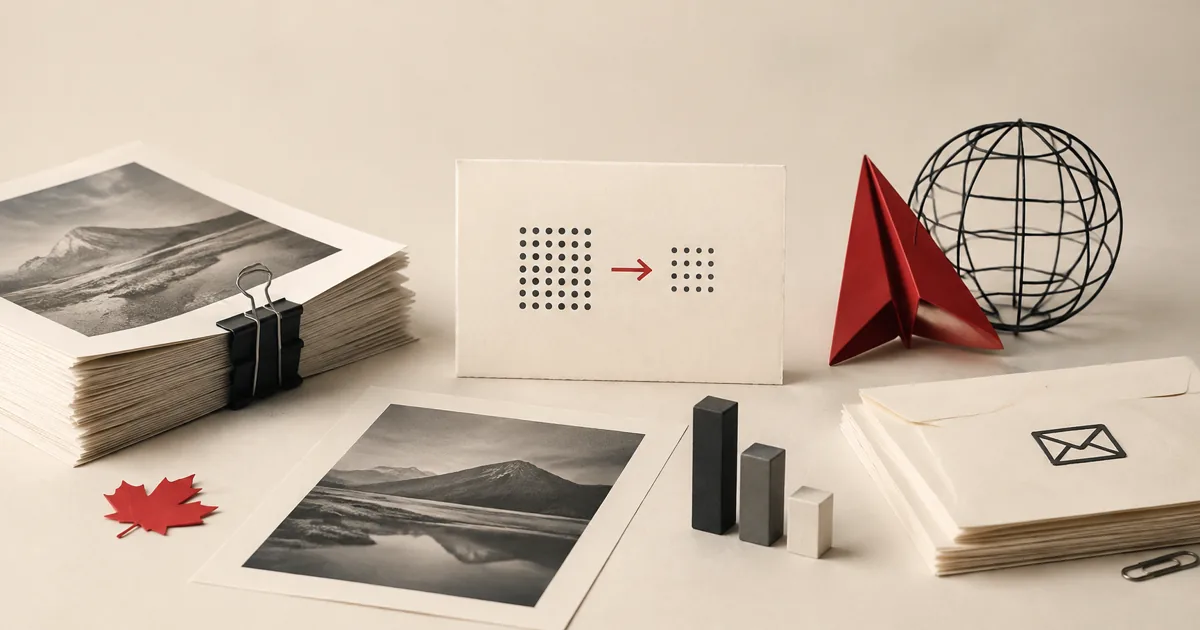
Most PDFs become “too big” for ordinary reasons: a phone scan at full resolution, a report exported with oversized images, or a document that passed through several apps before it reached you. The real goal is rarely to make the file as tiny as possible. It is to make it small enough for email, portals, or web delivery without making the important pages unpleasant to read.
This guide focuses on that tradeoff. You will see when to use Screen, eBook, Printer, or Prepress, what to check after compression, and when it is smarter to remove pages or clean up the source instead of pushing compression harder.
- When to use Compress PDF
- Step-by-step: Compress PDF in PDFMaple
- Pro tips for better results
- Real-world use cases for everyday email and web compression
- Expert tips that save rework
- Is it safe to upload your files?
- Online tool vs desktop software — which should you use?
- Frequently asked questions
- What to do next
When to use Compress PDF
- Email a PDF that exceeds attachment limits.
- Speed up uploads to portals and learning platforms.
- Make PDFs load faster on websites and mobile devices.
- Reduce storage usage for archives.
Step-by-step: Compress PDF in PDFMaple
- Open Compress PDF and upload your file.
- Choose a quality level: Screen, eBook, Printer, or Prepress.
- Run the tool and wait for compression to finish.
- Download the smaller PDF and review quality (especially images).
Pro tips for better results
- Start with eBook for a good balance; use Screen for the smallest files.
- If text looks blurry, switch to Printer or Prepress.
- Remove unnecessary pages first to reduce size even more.
- Cropping large white margins can also reduce file size on scans.
Real-world use cases for everyday email and web compression
Most problems in this workflow appear after the file leaves your screen. A good outcome here is the smallest file that still looks acceptable on the pages people actually care about.
Business and operations
A team may need to send a monthly report to clients whose mail servers reject large attachments. That matters because the next person usually cares more about whether the file arrives and opens quickly than about the original export size.
Student projects
A student can hit a strict upload limit on a scanned assignment or portfolio PDF even though the content itself is correct. That lowers the chance of a last-minute upload failure while keeping the pages readable for grading.
Legal and admin work
Administrative uploads often fail because scanned records are far larger than the submission portal allows. That makes portal submissions smoother because the file is small enough to accept without turning fine print into mush.
Freelancer delivery
Freelancers regularly need smaller proposal or portfolio PDFs that still look clean on a client laptop or phone. That helps the client review the file on a laptop or phone without waiting on a bloated download.
Personal paperwork
Insurance, visa, and HR portals often set a hard size limit, so compression is the last step that makes the upload possible. That often makes the difference between a portal accepting the upload and forcing you to rescan or split the document.
Expert tips that save rework
Optimization jobs usually go wrong when people chase the smallest possible file and stop looking at the pages that matter. With compress pdf files for email and web without ruining quality, the useful review is whether readability, upload success, and downstream sharing are all still intact after processing.
- Start with the real target: Compressing without a target leads to over-compression. Know whether you need under 10MB for email, under 2MB for a portal, or just a more reasonable download size.
- Scanned files behave differently: Image-heavy scans usually shrink more dramatically than text PDFs. That also means they are easier to over-compress, so review a few pages with small print before sending.
- Do not stack compression blindly: Running a PDF through several aggressive compression passes can make it look worse without saving much extra space. Make one deliberate adjustment, then compare the result.
- Remove unneeded pages before compressing: If the file includes blank scans, duplicates, or appendices the recipient does not need, deleting them first is often the cleanest size reduction available.
- Review on the device that matters: A PDF that looks acceptable on a large monitor may be harder to read on a phone. Check the smallest text on the device your audience will actually use.
Save the output under a clear name and test the exact pages most likely to fail in email, uploads, or printing. That quick check is more useful than running the same optimization twice.
Is it safe to upload your files?
Yes—if the service explains exactly how the upload is handled. PDFMaple processes compression jobs over HTTPS/TLS, so the file is encrypted while it travels between your browser and the tool. The platform is built to process the document for the job you requested, not to turn the upload into a long-term storage folder.
Uploaded PDFs and compressed results are deleted automatically after processing, and PDFMaple does not read, sell, or store file contents as a document-hosting business. That is the practical baseline you should expect from any online compression tool, especially when the PDF contains contracts, application paperwork, invoices, or scanned records. For the detailed policy language, review the Privacy Policy.
Online tool vs desktop software — which should you use?
A browser tool is the better fit when the job is simply “make this PDF small enough to send.” It is fast, works on borrowed machines, and is usually all you need for one-off email or portal limits. Acrobat and other desktop tools make more sense when you need repeatable production settings, finer image control, or a larger prepress workflow.
The desktop route is stronger when you need precise image downsampling, repeatable prepress settings, and large recurring compression jobs. For routine document chores, though, the lighter online path is often the more sensible choice because it gets you to the output faster.
- One task, one result, no install
- Useful on shared or borrowed devices
- Quick enough for phone and tablet work
- Good when the file just needs to move forward
- Complex editing beyond the immediate task
- Managed enterprise or compliance setups
- Heavier production workflows
- Situations where local-only control is required
Frequently asked questions
What does each compression level actually change?
The setting mostly changes how aggressively images and other resources are recompressed. Screen aims for the smallest file and is usually best for simple viewing, while Printer and Prepress keep more detail for output quality. If the PDF includes tiny labels, signatures, charts, or engineering drawings, always compare those pages before you send the compressed copy.
How much can I shrink a PDF without ruining it?
That depends on the source. A text-heavy PDF exported from Word or Excel often compresses well with very little visible change, while a phone scan with handwriting or stamps reaches its quality limit much sooner. For compress PDF work, the real target is not “smallest possible file”; it is “small enough for the upload or email limit while still readable on the pages that matter.”
Why is my PDF still too large after compression?
Some files stay large because the size problem is structural, not just image quality. Embedded fonts, very high-resolution scans, repeated attachments, or unnecessary pages can keep the file heavy even after one compression pass. In those cases, remove extra pages, crop oversized scan margins, or re-export from the source document before you try to compress again.
Should I compress before or after other PDF edits?
Usually after. If you merge files, delete pages, rotate scans, or add protection first, you are compressing the exact version you plan to share. That keeps the workflow cleaner and avoids redoing compression after the document changes again.
Can I compress a scanned PDF safely?
Yes, but scanned PDFs are where people most often overdo it. Use a balanced level first, zoom into small print, signatures, or handwritten notes, and check the result on the device the recipient will actually use. If those details look weak, step back to a higher-quality setting instead of forcing a smaller file.
What should I check before emailing or uploading the compressed PDF?
Open the result, verify the final size, and review a few representative pages instead of only the first one. Focus on the smallest text, tables, IDs, stamps, or fine line graphics because those are the elements most likely to degrade. Once the PDF passes that quick review, rename it clearly and use the compressed copy as the version you actually send.
What to do next
Once this part is done, the workflow normally shifts to uploading, emailing, or archiving the lighter version once quality is confirmed. Use the links below if that is what you need next.