Excel to PDF
Convert Excel to PDF online. Turn spreadsheets into clean, print-ready PDFs for sharing, filing, or upload.
Files are sent to PDFMaple’s server when you run processing or export. Some previews and page edits run on your device. File handling and retention
1 Select your files
2 Process & download
Learn more about Excel to PDF
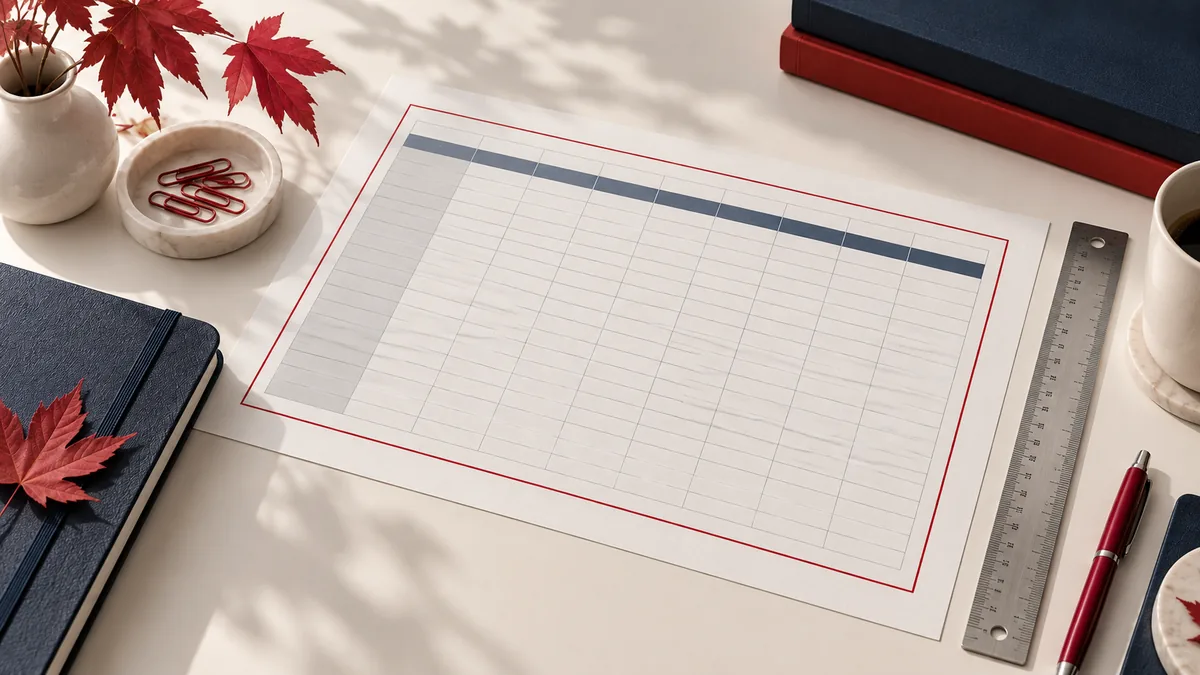
What a print-ready spreadsheet PDF should show
Excel to PDF is about turning a working spreadsheet into a fixed view that other people can read, print, or file without changing formulas or layout. The useful result is a PDF that includes the right rows, columns, page breaks, and sheet selection for the audience.
This matters for reports, invoices, schedules, summaries, dashboards, and approval packets where the spreadsheet is finished enough to distribute but not something you want other people editing cell by cell.
When Excel belongs in PDF form
- Create print-ready spreadsheet reports with a stable page layout.
- Share dashboards or tables with people who should not edit the workbook.
- Upload a PDF version of a spreadsheet where XLSX is not supported.
Choose PDF when the workbook needs to be consumed rather than manipulated. It is ideal for sending a stable snapshot of the sheet to clients, reviewers, managers, or filing systems that do not accept XLSX.
How to prepare the sheet before conversion
- Upload your spreadsheet file in XLS or XLSX format.
- Check print areas, scaling, and sheet selection so the PDF reflects the workbook the way you expect.
- Click Run tool and let processing finish without closing the tab mid-task.
- Check each page for clipped columns, broken tables, or scaling issues before distributing the PDF.
Most conversion issues come from print settings, not from the PDF step itself. If the workbook has the correct print area, scaling, and page setup before you convert it, the PDF usually behaves well.
Print and scaling checks before handoff
- Confirm the PDF includes the intended sheet or sheets and not hidden tabs or extra working areas.
- Check whether wide tables were scaled sensibly or whether key columns became too small to read.
- Review repeating headers, page numbers, and page breaks if the result is meant for print or formal review.
Spreadsheet PDFs are judged by what they cut off. Pay special attention to the last visible column, bottom rows, and any totals or signatures near page edges.
Spreadsheet-to-PDF mistakes that create confusion
- Converting the workbook without setting a print area, then discovering the PDF includes empty columns and partial pages.
- Scaling everything to one page even though that makes the numbers too small to read in the real workflow.
- Forgetting that hidden sheets, comments, or print ranges can change what ends up in the PDF.
A PDF that technically contains the whole sheet is still a bad result if nobody can read it. Readability matters more than forcing the workbook into the fewest possible pages.
Layout and distribution notes
Excel PDFs are often used as records of a report at a moment in time. Keep the workbook for future editing, but label the PDF clearly if it represents the approved or submitted version.
If the spreadsheet contains sensitive financial or employee information, remember that PDF preserves visibility, not confidentiality. Apply protection separately if the distribution list should be limited.